The Ideal Ecosystem for Bionics Innovators… What Does it Look Like?
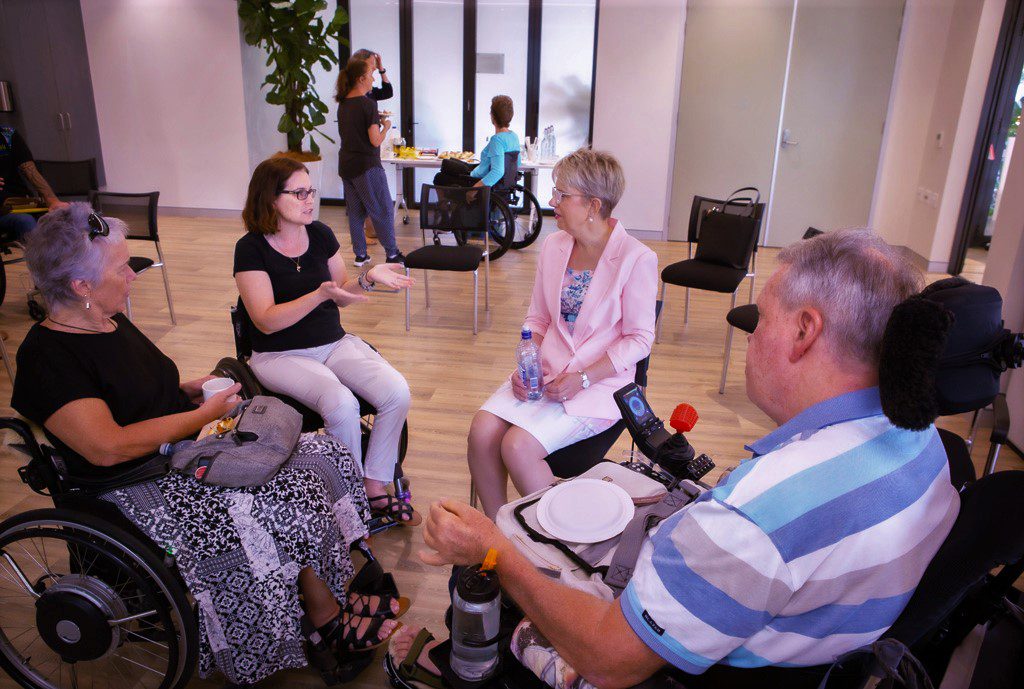
Talking to our bionic-medtech innovators about ‘the look and feel of an ideal ecosystem’ definitely puts the spotlight on issues and opportunities on our doorstep.
The minds of most of our innovators turned to smart (and adventurous) people they love to have around them, new ways of working and the diversity of talent needed to take a bionic device or treatment to market.
No doubt that biomedical engineers, immersive tech and gaming leaders, industrial designers, AI specialists, ICT programmers, clinicians and consumers were in the mix, but someone has to be ‘project manager’ too! And what about the end user, are they there at the beginning, the middle and the end of the process… or in truth, are they sometimes not there at all?
Some innovators have fully embraced consumer co-design and that’s a key characteristic of the ideal ecosystem for our innovators.
However, it remains that many people impacted by trauma, disease or disability are yet to see and try bionic devices, limbs and treatments and very few are invited to comment on device design. While startups and medtech industry leaders focus on the consumer very early in their product design, alas, university researchers are not seen to be engaging with end users much at all! The first usability testing of devices with end users often occurs at the clinical trial stage when much of the expensive device design has been completed.
Finding new ways to engage end users in bionic discoveries has been front and centre in our Bionics Gamechangers Roundtables along with transforming rehabilitation systems across Australia to better test new technologies and boosting rural and remote access to innovations via digital platforms.
Alongside mobility, the bionic senses and neurotech devices and brain computer interfaces (BCIs) were all areas where innovators see a need for greater patient/consumer engagement. Participation of patients in decision-making about bionic implants and organs is viewed very differently. Despite the complexity of bionic implants, engaging patients and their families is becoming a high priority for Australia’s leading surgeons who are breaking new ground with an array of bio-compatible implants.
What further changes are needed (and likely) in our bionic innovation ecosystem ?
Starting with the need, rather than a preferred technology was seen as the best possible guidepost for researchers and innovators with bionics end users at the heart of co-design. A new highly connected model of medical bionic discovery and translation focused on the everyday needs of people impacted by injury, disability and disease is expected (with learnings taken from the most advanced European models of health innovation).
National advocacy was viewed as especially important to secure dedicated Federal research funds and suitable grants for medical bionics R&D. Equally, roundtable attendees saw a need for increased guidance from the Australian Therapeutic Goods Administration (TGA) on regulatory processes. Most agreed that this will help to accelerate bionic-medtech device approvals and ultimately clear the way for the adoption of a wider range of bionic technologies in Australia.
Social and geographic was a much-discussed theme. As one participant said, “Innovations that are fit for function and fit for farmers in rural communities are needed along with virtual platforms of healthcare for bionic end users no matter where they live.”
Shifts in thinking about life beyond trauma and a life reclaimed by those with disability is a big driver of change in the bionics ecosystem and this was also discussed in our Bionics Gamechangers Roundtables. Our bionics innovation community sees a powerful partnership between bionic innovation and parasports emerging in the lead-up to Brisbane’s 2032 Olympic and Paralympic Games. Sports-focused rehabilitation including Queensland’s world-leading parasports training programs is likely to bring individuals of all levels of capability into the design and testing of new bionic devices, treatments and technologies.
Interested in seeing more gems of insight from our Bionics Gamechangers roundtables? Become a Bionics Gamechangers member today!
