Calibration-Free BCI
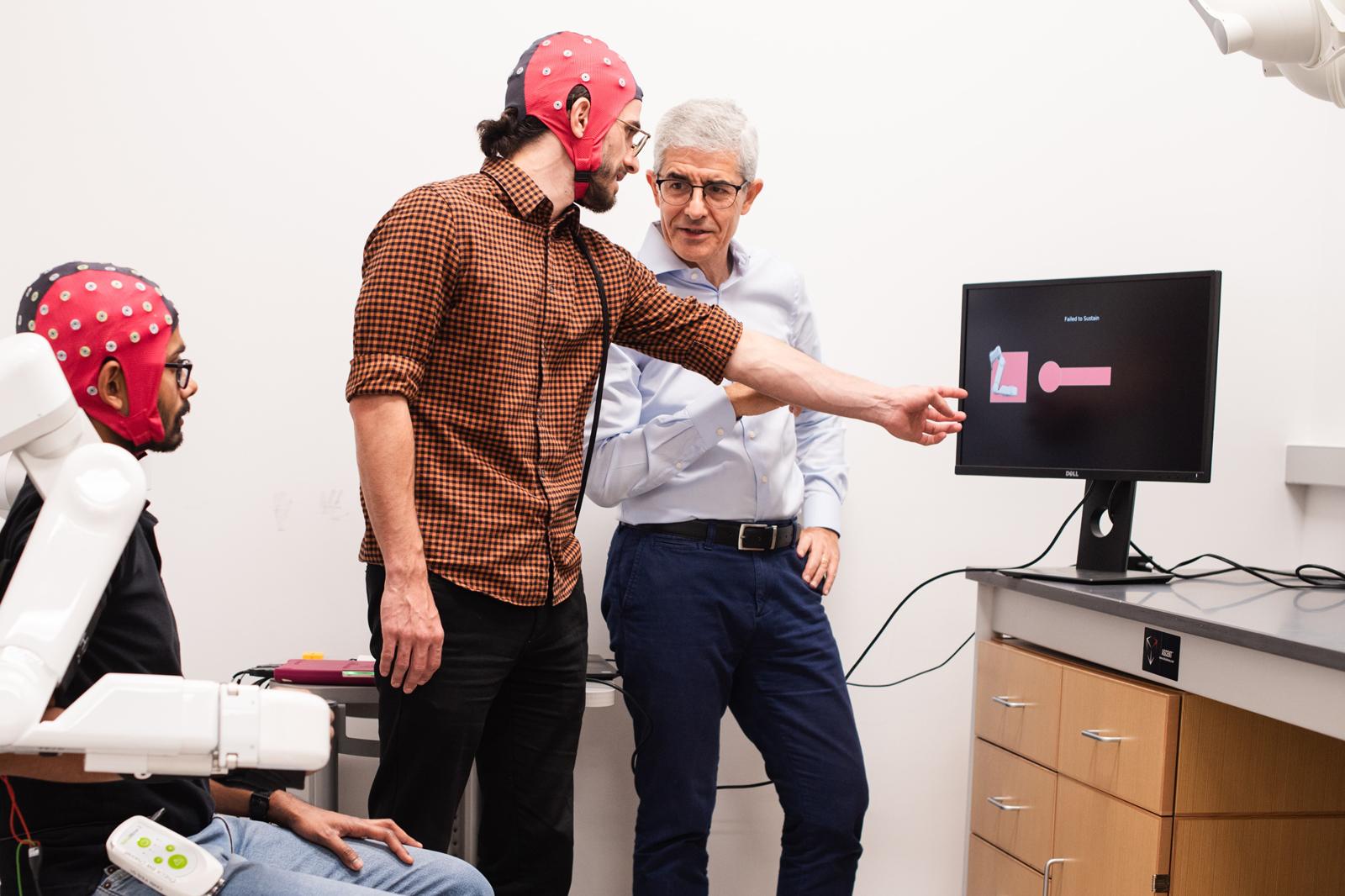
Image credit: The University of Texas at Austin
Researchers from The University of Texas at Austin have developed a “one size fits all” brain-computer interface (BCI) using machine learning.
While traditionally BCIs require significant calibration to ensure they meet specific patients’ needs, this innovative technology rapidly deciphers an individual’s requirements and programs itself through repetition – a benefit which researchers say overcomes a big hurdle to mainstream BCI adoption.
The foundational study, recently published in PNAS Nexus, saw 18 participants with no motor impairments wear a cap covered with electrodes to measure electrical signals from the brain. A decoder then interpreted the data and translated it into two thought-controlled tasks: a car racing game, and an activity which required participants to balance each side of a digital bar.
“When we think about this in a clinical setting, this technology will make it so we won’t need a specialized team to do this calibration process, which is long and tedious,” said co-researcher, Satyam Kumar.
Researchers hope to later extend their study to include with motor impairments to apply it to larger groups in clinical settings.
“It will be much faster to move from patient to patient.”
Refer to the journal article published in PNAS Nexus, or check out this summary via The University of Texas at Austin.
