Funding Boost for Brain Stimulation Research
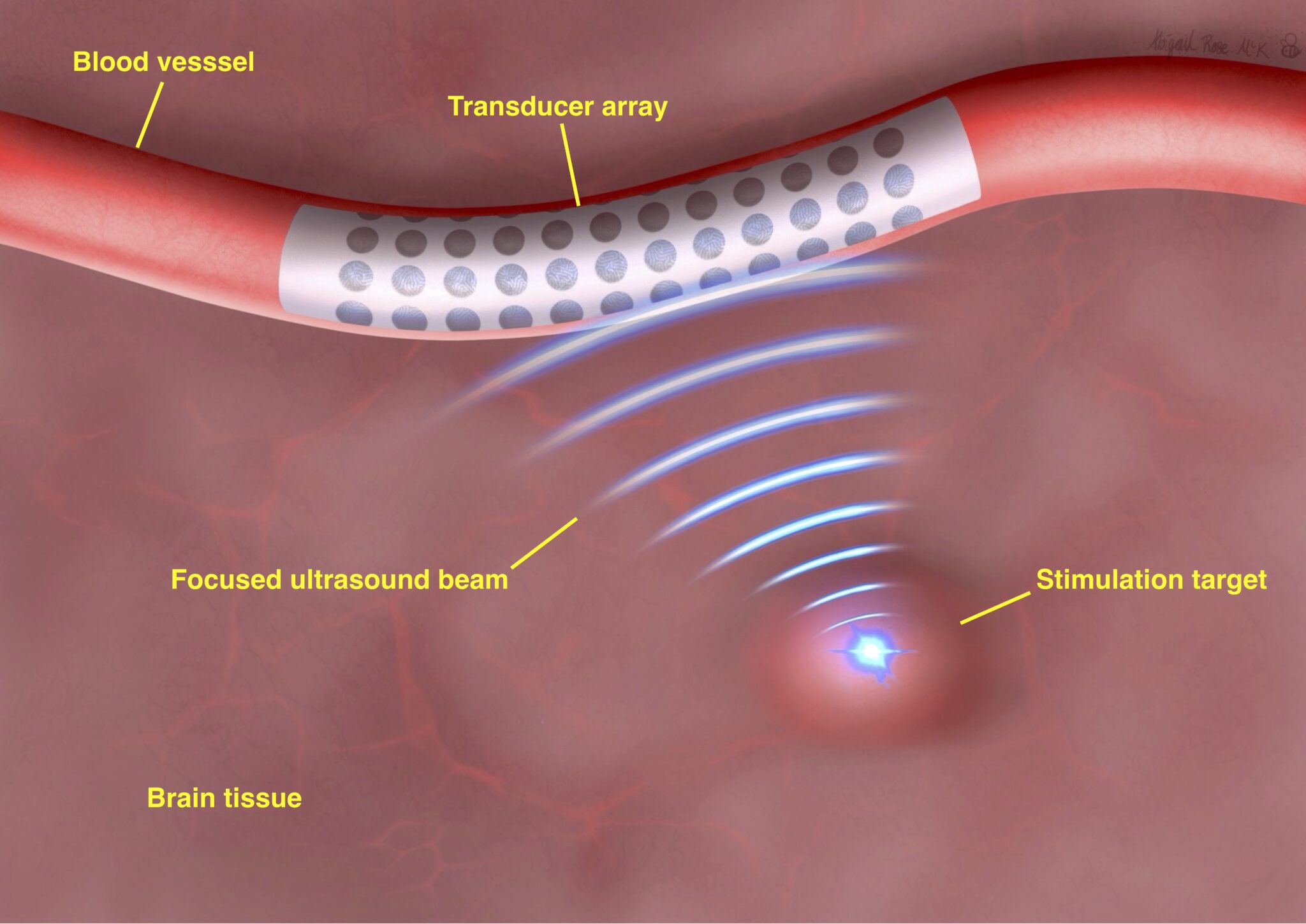
Image credit: Professor David Grayden via The University of Melbourne
A Melbourne-based team has been awarded over $900,000 to advance their endovascular-focused ultrasound technology for brain stimulation, in the hopes of developing a novel treatment for neurological conditions such as Parkinson’s disease and epilepsy.
Announced earlier this month, the three-year National Health and Medical Research Council (NHMRC) Development Grant has been awarded to a team led by the University of Melbourne’s Professor David Grayden.
Partners on the project include medtech, Synchron – world-leading pioneers in the development of brain-computer interface (BCI) devices.
For people with Parkinson’s disease or other neurological conditions affecting movement, deep brain stimulation can successfully disrupt the irregular brain activity causing tremors and other movement-related symptoms – or in the case of epilepsy, even prevent seizures from happening.
However, current deep brain stimulation treatments require open brain surgery and rely on electrical stimulation which is not always exacting in the area of the brain being targeted.
In this study, researchers will implant a permanent array of microscopic transducers into a blood vessel in the brain, connected to a device within the chest that powers the transducers and controls the degree of ultrasound-powered stimulation.
“If successful, this project will demonstrate that our technology can safely be inserted into a brain blood vessel to stimulate the brain effectively with focused ultrasound and without open brain surgery,” said Professor Grayden.
It is hoped the first human trial of the device will commence in 2030.
Check out the full story via the University of Melbourne.
