Growing Heart Muscle to Treat Chronic Disease
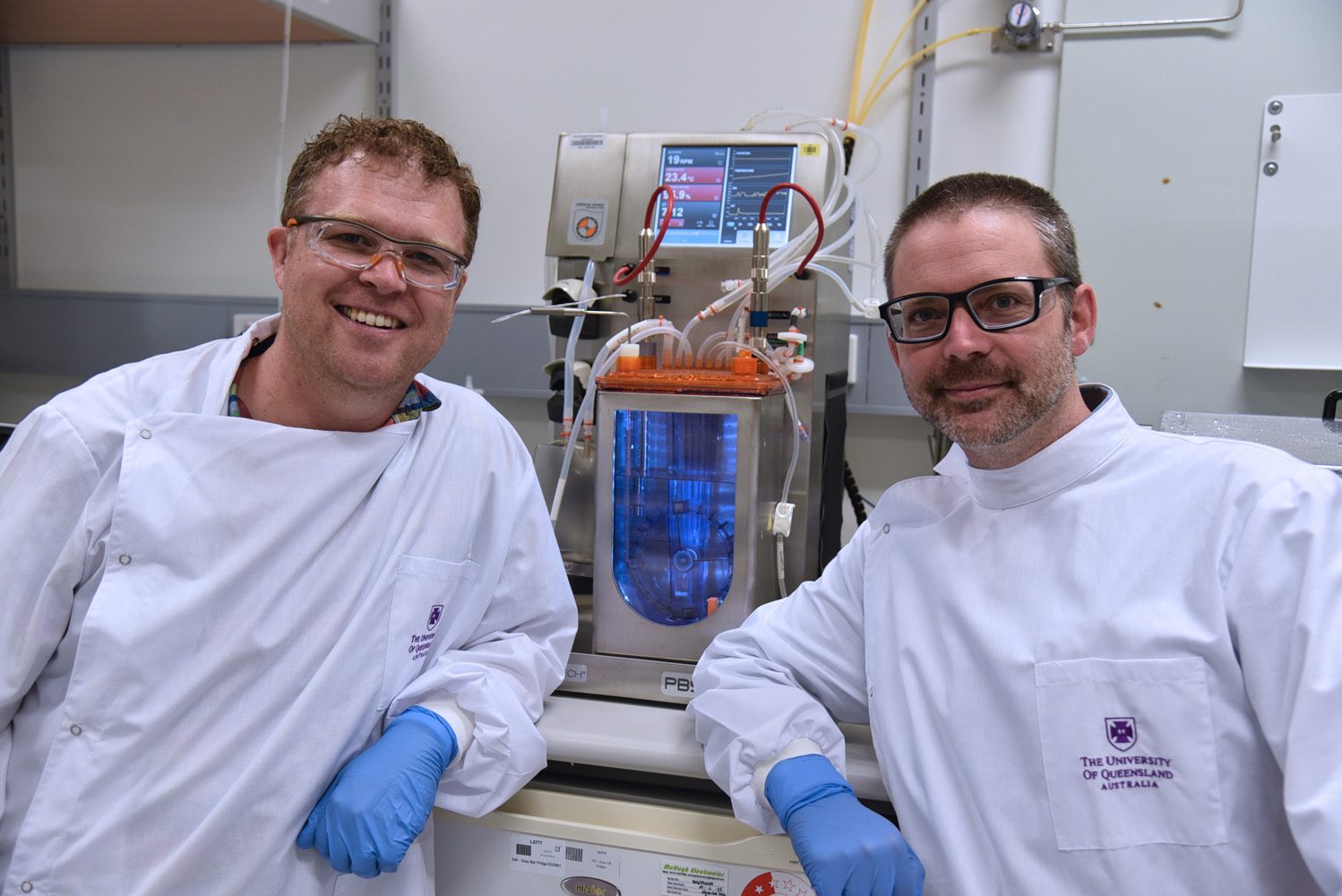
Image credit: Australian Institute for Bioengineering and Nanotechnology, The University of Queensland
With heart disease the leading cause of death in Australia and the world, cutting-edge work from local researchers could one day lead to a life-changing lab-grown treatment option.
A team from the University of Queensland’s Australian Institute for Bioengineering and Nanotechnology (AIBN) together with the University of Sydney’s Professor James Chong have been exploring how to grow functional grafts of beating heart muscle, known as cardiomyocytes, to help remuscularise a damaged heart.
Their studies, recently published in Nature Cardiovascular Research, investigated methods for growing clinically relevant amounts of the muscle cells as a potential heart disease therapy.
“This project represents a significant amount of work we’ve performed here at AIBN over the past few years,” project co-researcher, Dr Andrew Prowse told the University of Queensland.
“We’ve produced large doses of heart muscle cells from pluripotent stem cells with a goal of proving the technology can be a viable treatment option.”
However, researchers were also quick to caveat the findings with the need for further studies to demonstrate the technology’s safety.
AIBN’s Dr Steve Dingwall (pictured above with Dr Prowse) noted that grafting cardiomyocytes onto a damaged heart can lead to irregular heart rhyme, a complication which must be “overcome if this is going to be seen as a mainstream, palatable option.”
“This collaboration…brings us closer to that point,” said Dr Dingwall.
For further information, check out the article published in Nature Cardiovascular Research, or refer to this story via the University of Queensland.
