Neurostimulation as Potential Alzheimer’s Treatment
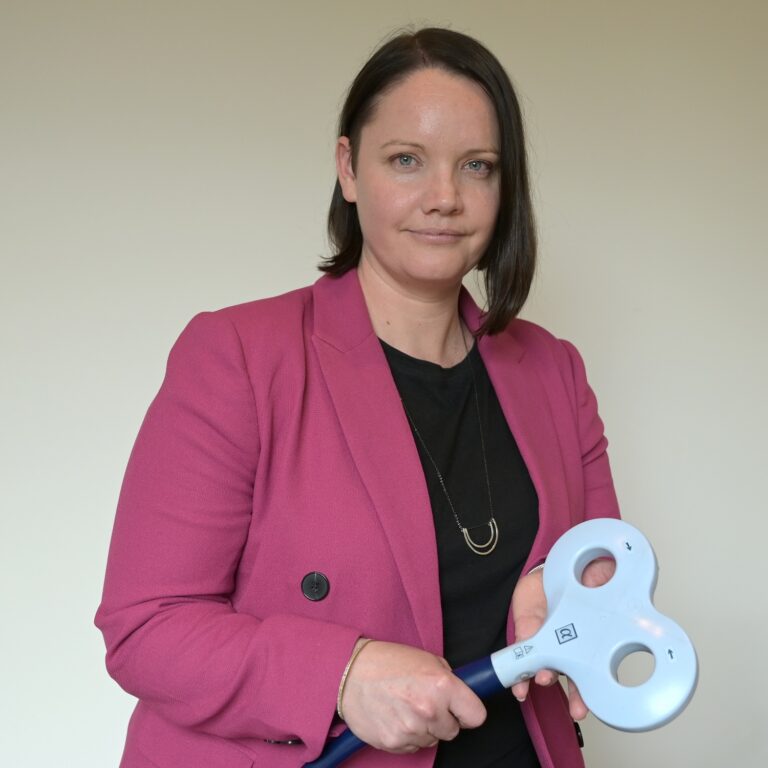
Image credit: Bionics Institute
Exciting new research has shown changes in brain activity and cognitive function in patients with Alzheimer’s disease following six weeks of a non-invasive neurostimulation therapy, hinting at a promising future treatment pathway.
Known as intermittent theta burst stimulation (iTBS), the approach was found to significantly improve brain connectivity and episodic memory for study participants with mild to moderate Alzheimer’s.
Led by Professor Kate Hoy from Melbourne’s Bionic Institute (pictured above), researchers discovered that the strength of a patient’s brain connectivity, both prior to and following treatment, could predict improvement in episodic memory.
“This is the first trial to provide iTBS to multiple brain regions in Alzheimer’s disease,” Professor Hoy said in a statement.
“We were able to show that our iTBS treatment successfully improved a specific type of brain activity that is closely associated with cognitive functioning, and that this was linked with improvement in memory.
“We’re pleased to be able to share these findings, which have led us to continue our research into the potential of brain stimulation to help fight memory loss in Alzheimer’s.
Check out the full story via the Bionic Institute or refer to the research paper in Neurobiology for Aging for further details.
