Smartwatches Predicting Seizures
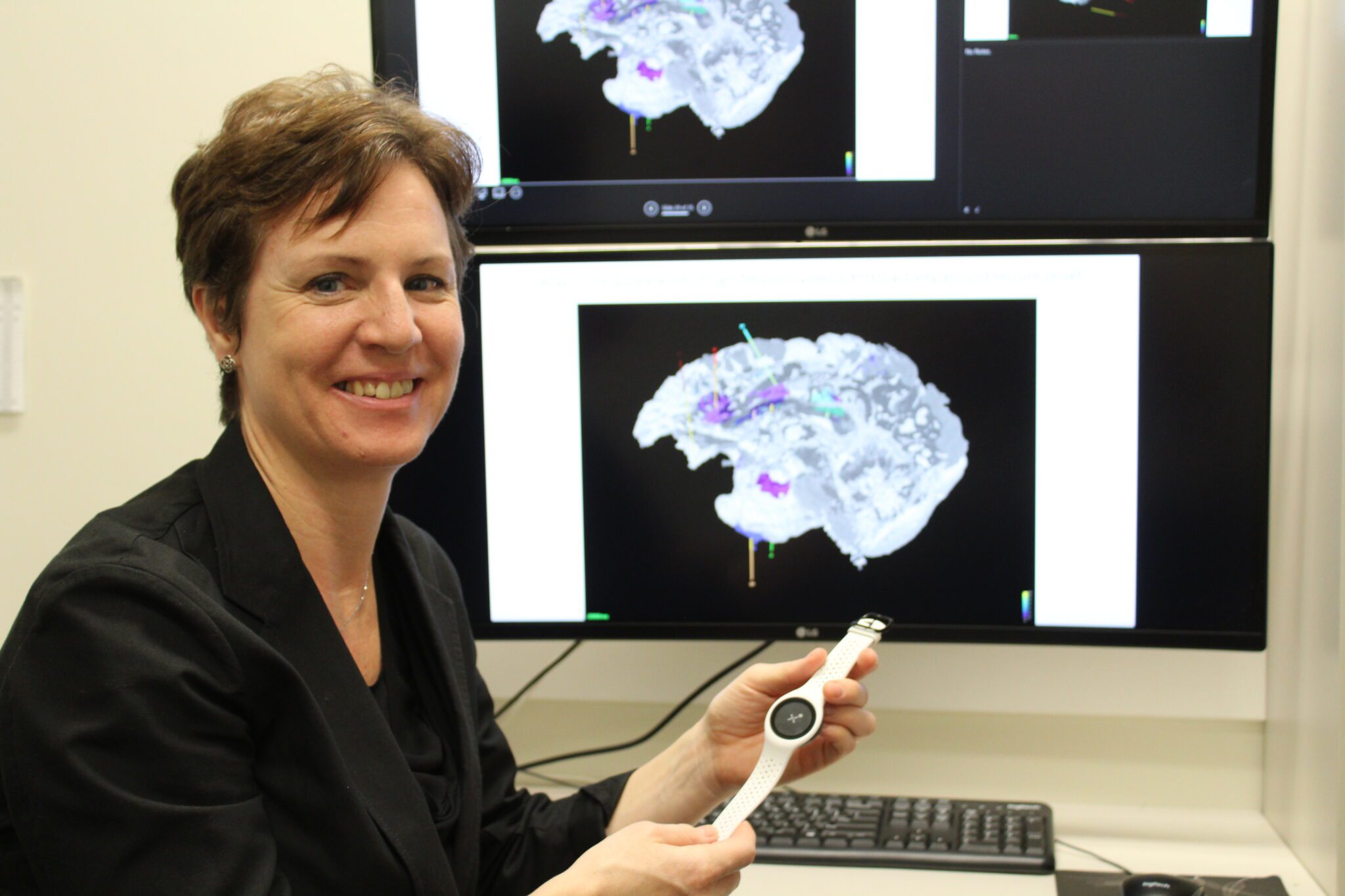
Photo credit: Mater Research
A new study being undertaken by Mater Research and The University of Queensland is investigating the use of smartwatches in predicting stress-induced epileptic seizures.
The project, which last year received a $40,000 grant through Bionics Gamechangers’s Bionics Challenge, is being led by Professor Aileen McGonigal who is internationally renowned for her efforts to advance treatments for epilepsy.
Professor McGonigal said chronic stress was known to increase seizure frequency in some patients with epilepsy, impacting quality of life.
“Epilepsy is characterised by the tendency to have recurrent seizures – caused by intermittent disturbances of brain rhythms – that can provoke falls, lack of awareness, even convulsions,” said Professor McGonigal.
“By tracking these brain rhythms, combined with the heart rate variability and electrodermal activity picked up by smartwatches, we hope to capture signatures to individual personalised stress responses and possibly even personalised seizure information.
“These ‘stress signatures’ could be used to refine wearable devices for seizure detection and even alert a patient to periods of high seizure risk.”
The study brings together specialised biology researchers, clinical neurologists and engineers.
One of the most common neurological disorders globally, epilepsy is thought to impact 30,000 Queenslanders alone. Bionics Gamechangers is excited to support and track the progressive improvements in diagnostics that this innovation will bring.
Read more about the study via ABC News.
