Step Forward for VNS Pain Treatment
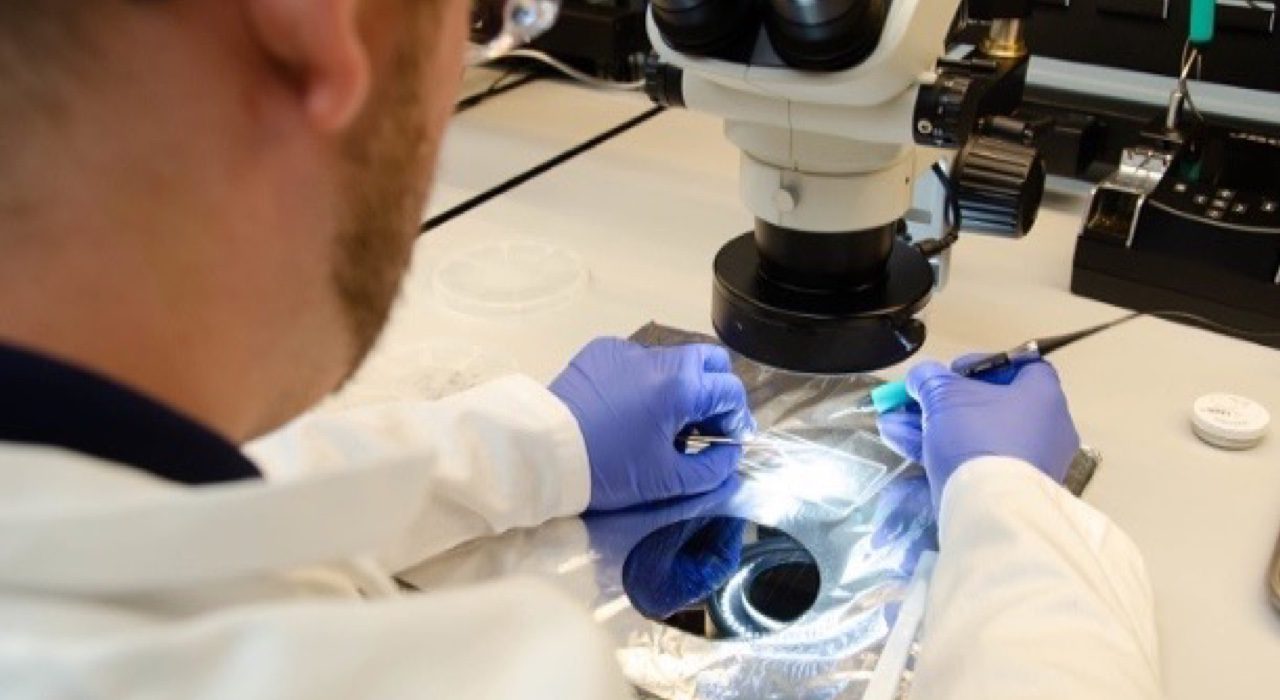
Image Credit: WVU Photo/Paige Nesbit
Exciting advances continue in the world of bioelectronic medicine, with engineers developing a tiny electrode to accelerate the approval and use of vagus nerve stimulation (VNS) as a treatment for pain and other conditions. Known as the MouseFlex, the cuff-shaped device was developed by a team in the United States for use in VNS clinical trials on mice, before treatments are tested on humans.
The flexible device is fitted around the vagus nerve of a mouse and sends electrical impulses into the body. This approach is viewed as a step forward from past technology, bringing the ability to tolerate a significant flow of electric current and improved handling during surgery.
“This research is important because our flexible electrodes remain functional after electrical stimulation. Robustness of electrodes on this level is rare and very exciting,” said Dr Tao Sun, study co-author and Research Assistant Professor at the Benjamin M. Statler College of Engineering and Mineral Resources at West Virginia University.
“After we performed the surgery, then removed the electrodes and cleaned them, the electrochemical performance largely reversed to the level it had before the surgery, which means that these electrodes do tolerate surgical handling.”
Dr Sun said the findings were important both for clinical studies and device commercialisation, with patients living with drug-resistant disease being just one of the potential end-users.
“For many drug-resistant patients, reliable and safe vagus nerve modulation opens new avenues to effective treatments with few or no side effects,” said Dr Sun.
“Our MouseFlex technology could also interface with nerves besides the vagus nerve — the sciatic and sacral nerves and the spinal cord, for example. Stimulating the spinal cord is effective for managing chronic pain and could restore lost motion capability for paralyzed patients.”
Visit the West Virginia University website for further information, or view the study results published earlier this year in Acta Biomaterialia.
