The Future of Bionic Hands
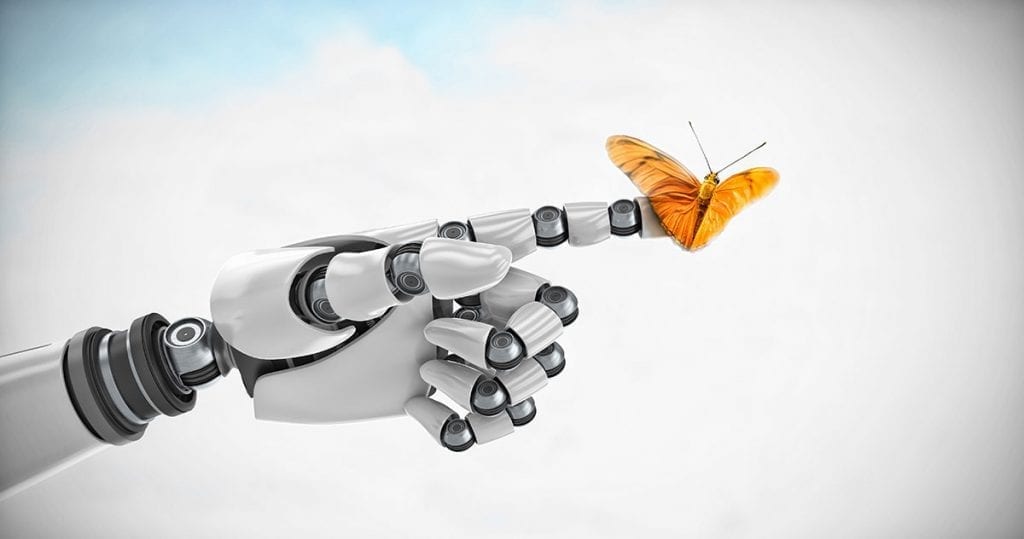
Could this be the most advanced prosthesis the world has ever seen?
Thought control that gives a strong and stable nerve signal to a robotic hand is one of the latest innovations to emerge from the University of Michigan Medical School. So far, the nerve signal to a bionic limb has been one of the biggest hurdles of mind-controlled prosthetics. The Michigan team has been able to successfully tame unpredictable nerve endings, separate nerve bundles into smaller more controllable fibres and amplify the signals that move through those nerves.
The new approach uses tiny muscle grafts and machine learning algorithms that draw on insights to brain-machine interfaces to give amputees far greater motor control. This innovation is so advanced that their prosthetic hand can provide individual finger control using the nerves in a patient’s residual limb. Existing prosthetic hands have advanced movement abilities, but it is rare that these actions are intuitive.
A core difference with this new innovation is that there is no learning required from the participant, instead, the learning happens in algorithms. Even in initial tests the Michigan team found the prosthetic hand worked on the first go. The ‘hand’ is already enabling those testing it to pick up blocks plus spherically shaped objects and allow the thumb to move in a continuous motion.
The University of Michigan Medical School will continue clinical trials of this prosthetic hand. The team will now work towards a complete restoration of able-bodied hand movements.
Video credit: Michigan Engineering
For more information view the original article from Nextgov or read the full announcement from the University of Michigan.
